Showing posts with label United Kingdom: Army. Show all posts

Sunday, 16 November 2014

Vickers Machine Gun

The Vickers machine gun came into service in 1912, before the break out of World War 1 and stayed in service until 1968. As the name suggests, the Vickers machine gun was manufactured by Vickers Limited in the UK. The original gun was a water cooled machine gun that fired a .303 round.

Many will remember the Lewis Gun from the First World War, which was a light machine gun; the Vickers Machine Gun was also ever present as a medium machine gun.

The gun took a team of around 6 to carry it from place to place, but only two were used during firing. This included one soldier firing the gun and the other feeding the ammunition for continuous fire.

The Vickers machine gun wasn’t just used by the army. The gun was also mounted onto a Vickers biplane in 1913 as an experiment for air warfare. The outcome was that the Vickers machine gun became the standard choice for a machine gun on both British and French war planes in the First World War.

After World War 1 the British military looked at phasing out the Vickers and using alternative options for the Army, however the decision was to keep with the Vickers when competition was reviewed. The only outcome was that an alternative was used for mounting on tanks.

Part of the Vickers gun success is the fact that it was so reliable. The gun was renowned for failing rarely which gave soldiers confidence in the weapon in the face of opposing forces.

Saturday, 15 November 2014

Short Magazine Lee-Enfield Mk III


The Lee-Enfield rifle joined the British Army as standard issue in 1895 and at the outbreak of World War I the British Army was using the Short Magazine Lee-Enfield Mk III (SMLE Mk III for short). The Short Magazine Lee-Enfield Mk III also had a Sword bayonet (Pattern 1907 - P'07). The rear sight and charger guide were made simple compared to earlier models. The Short Magazine Lee-Enfield Mk III fired Mk VII High Velocity spitzer .303 ammunition.

By 1915 the British government found that the speed of manufacturing the Mk III SMLE and the high cost associated meant there was a need to review the Lee-Enfield to find a quicker and more cost effective way of manufacture. The result was the Short Magazine Lee-Enfield Mk III* that was the original Mk III without the magazine cut-off, rear sight adjustment and long range sight. The gun also saw the cocking bolt changed to a slab, rather than the round ball top.

Due to the nature of World War I and the need for constant replenishment of guns, the Lee-Enfield manufacturers had to contract out production to support military needs.

Whilst iconic in the First World War, the Short Magazine Lee-Enfield Mk III* was also heavily used in the Second World War also. In the 1920’s the gun was renamed to the Rifle No.1 Mk III* so many are not aware of this.

1918 dated Short Magazine Lee-Enfield Mk III*

Sunday, 25 December 2011

The Siege of Kut

From the 7th December in 1915 through to the 29th April 1916 during the throws of the First World War a battle occurred between the British forces and the Ottoman Empire (present day Turkey).

The Siege of Kut, also known as the Siege of Kut Al Amara or the First Battle of Kut involved a British garrison being besieged by the Ottoman Army. The British garrison of Kut was found some 100 miles south of Baghdad in the nook of the meandering Tigris River.

At the outset of the siege the British had an 8,000 strong number of troops, made up of the 6th (Poona) Division, part of the Indian Army. This army was led by the British Major-General Charles Townshend. The Ottoman Army had 11,000 men and was led by the German (Prussian) Field Marshal Colmar Freiherr von der Goltz (who was also a Baron) and the Ottoman Halil Bey.

The British had fallen back to the garrison of Kut on the 3rd December after the Battle of Ctesiphon against the Ottoman Army in November of 1915. This battle saw British lose a lot less men than the Ottoman Turks but also saw the British withdraw with the Ottoman Army in pursuit.

On the 3rd December the British settled into the garrison at Kut where they were dug in strong and well protected. When the Ottomans turned up on the 7th however the overwhelming number of Ottoman soldiers meant the British knew the Ottoman Army could lay siege to the garrison so they let the Cavalry escape south before the siege began.

In the month of December the Ottoman Army made three attacks on the garrison without any success, this led the German leader Field Marshal Colmar Freiherr von der Goltz to change tactics and build siege fortifications to stop the British receiving supplies or escaping.

Reports suggested that one month into the siege the British Major-General Charles Townshend wanted to escape south but was told to stand firm. Major-General Charles Townshend was then to report he only had rations for a month for his men, although there is reason to believe now he had enough for four months on reduced rations.

A relief expedition was sent by the British under General Aylmer in January 1916, this caused the Battle of Sheikh Sa'ad where General Aylmer’s forces were successful in pushing back the Ottoman Army by about ten miles. A few days later Aylmer sent his forces into battle again with the Ottoman Turks, this time called the Battle of Wadi pushing them a further 5 miles back.

General Aylmer decided to embark on a final push on the Ottoman Army but was unsuccessful as the British lost 2,700 men in the battle and this gave the Ottoman Army the strength to push back to earlier positions to keep up the siege. This was the Battle of Hanna.

The Ottoman Army was reinforced with a further 20,000 to 30,000 men to ensure they had enough men to repel any future British forces wishing to relieve the garrison at Kut.

In March further attempts were made by the British to relieve the Kut garrison and all these were unsuccessful. In April the Royal Flying Corps made supply drops to the garrison (believed to be the first supply drops by air in history). This was too little too late for the garrison however the British made a gesture of £2 million to let the British army leave the garrison which was declined and the British therefore surrendered on the 29th April 1916.

Major-General Charles Townshend went to Constantinople as a POW where he was treated well. The rest of the British troops, now numbering 13,000 from all the relief attempts, were forced to march across the desert to Allepo in present day Syria. This march caused many to die as they didn’t have the strength to complete the march.

The Siege of Kut was a decisive victory for the Ottoman Turks however Field Marshal Colmar Freiherr von der Goltz died 2 weeks before the British surrendered from Typhus, although rumours are rife that he may have been poisoned by the people in the Ottoman Army he led.

Reports suggest that in total the British lost 30,000 dead or wounded and 13,000 captured during the siege and the relief operations associated with it while the Ottoman Army lost around 10,000 dead or wounded.

Monday, 19 December 2011

8th Kings Royal Irish Hussars

The 8th King's Royal Irish Hussars were active between 1693–1716 and then 1719-1958. From the year 1800 they served in the UK while prior to this they were based in Ireland.

The 8th King's Royal Irish Hussars saw battle in both World War One and World War Two.

During World War One the 8th King's Royal Irish Hussars were battling it out in the trenches of Northern France and Belgium. In fact along with many British forces the Hussars saw battles in some of the most pivotal and well known battles of the war.

The first battles that the 8th King's Royal Irish Hussars saw in the First World War was at the Battle of Givenchy between December 18th and the 22nd December 1914. After this the Hussars were then sent into the Second Battle of Ypres. It was commonly known that the Hussars soldiers were frequently sent to the front to dig new trenches.

In the Second World War the Hussars continued there battle hardened ways by becoming a tank force (today the 7th Armoured Division, The Desert Rats based near the Bergen-Belsen concentration camp in Germany). The first battles of the Second World War came in the North Africa campaign where the Hussars in British Stuart tanks fighting in Operation Crusader in relieving the Siege of Tobruk.

Other battles ensued which the Hussars joined and suffered many losses before the final African campaign where the 8th Hussars were pivotal in attacking the minefields at Alamein.

After showing bravery in Africa the 8th King's Royal Irish Hussars had some resbite in Cyprus before moving back to England. In England the Hussars were re-equipped with the stronger Cromwell tanks and stayed in England until duty called again and the Hussars were then to become a major part in the Normandy landings.

The Hussars were to land at Le Hamel on Gold Beach and were quickly to be brought into intense fighting around Villers-Bocage before then fighting against the 2nd Panzer Division. The Hussar forces saw many smaller battles as well as also being a major part of Operation Goodward in the march through France.

The 8th King's Royal Irish Hussars then battled hard through Belgium and Holland before finally getting over the Rhine into Germany in April 1945. It was in Germany that the 8th King's Royal Irish Hussars liberated both the Fallingbostel POW camp and the well known Bergen-Belsen Concentration Camp close by.

After working to support the liberated people of the concentration camp and also clear the camp of the thousands of dead bodies the Hussars were then to take part in the Berlin Victory celebrations on the 7th July 1945. Once their work was done the Hussars were based in Itzehoe within Germany until being demobbed in 1946.

Thursday, 22 January 2009

Battle of the Somme - First Day

The battle of the Somme is probably the most well known battle to have happened in the last one hundred years. This battle was fought between July and November 1916 and was called the Somme offensive at the time.

The battle of the Somme was one of the largest battles of the 1914 to 1918 war causing over one million five hundred thousand casualties.

The first day of the Somme was 1st July 1916 but seven days prior to this day there was a large artillery bombardment of 1.7 million shells (168 shells a minute for seven days) which the British believed would rock the core of the German army and leave little resistance. The truth was that many of the German defenders had survived by staying in deep dugouts throughout the bombardment as they had well built trenches.

While the bombardment was in full flow the British had dug deep mines full of explosives under the German lines ready for zero hour on the first day when the British advance was to start.

The attack at zero hour was to be made by 13 divisions of the British army and 11 divisions of the French army. These forces faced the German second army.

Ten minutes before zero hour on the first day (zero hour was 07:30am) an officer signalled and all the mines were blown. As zero hour struck the British and French climbed out of their trenches with 70 pounds (32kg) of kit and started towards the German lines.

The advance of the British was a huge disaster with many men dying before leaving friendly lines, while the French did have some success by advancing between 1,600 yards to 2,200 yards in different sectors on the day.

The British assualt started to wane in the late afternoon hours due to the numbers lost. Even after all the casualties of the day Lieutenant-General Henry Rawlinson who commanded the British fourth army issued orders at 10:00pm that he wanted the attacks to resume.

In the first day of the Battle of the Somme the British had 19,152 dead and 35,493 wounded while the defending German army suffered 8,000 casualties on the British front. The French had 7,000 casualties.

It took a good few days for the British command to realise the full extent of the disaster experienced on the first day.

Monday, 12 January 2009

Cruiser Mk VI Crusader Tank

The Cruiser tank Mk VI Crusader (A15) was a very important tank in the North Africa campaigns. Built from 1939 by Nuffield Mechanisation and Aero the Crusader tank had a two pounder gun, six pounder gun and one or two Besa MG guns.

The Mk IV Crusader boasted an operational range of three hundred and twenty two kilometres at a top speed of forty two kilometres on road or twenty two kilometres off road. The Crusader has a weight of around twenty tons and was powered by a Nuffield Liberty L-12 340 horse power engine. In total five thousand three hundred Crusader tanks were built, each carrying a crew consisting of a commander, gunner, driver and a loader. Note: the earlier models of the Crusader did not have a loader.

The Crusader tank was faster than any enemy tank which helped it immensely but had the draw back of a smaller armament than its enemy counterparts.

The first campaign that the Crusader saw battle in was Operation Battleaxe but it made its biggest impact in Operation Crusader named after the tank itself where the British 8th Army launched a surprise attack in late 1941 relieving the siege of Tobruck.

Crusader Specifications

Weight - 20 Tons
Length - 5.97 metres
Width - 2.77 metres
Height - 2.24 metres


At the end of the African campaign with the invention of the greater Cromwell and Sherman tanks the Crusader took a more back seat role being used for anti aircraft duties.

Friday, 26 December 2008

Bergen Belsen Liberation

Towards the end of World War Two the realization of some of the war crimes committed by the Nazi regime came to light when detention and concentration camps were found.

Among those camps was the infamous Bergen Belsen concentration camp. I visited Bergen Belsen in March 2007 as a pilgrimage to see what it must have been like as my late Grandfather was a liberating troop who found the camp in 1945, to read my pilgrimage click here.

My grandfather was stationed with the 8th Kings Royal Irish Hussars, although he had had his para training to gain an extra five bob a week in pay.

I know what he witnessed in the 2nd World War really shaped the person he was in life.

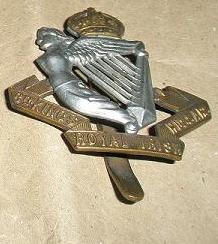
Below are his cap badges and dress badge.